Civilization project to use the past tense in Spanish
I have covered the past tense in Spanish with my grade 8 students (13-14 years old) this term and I want them to be able to describe past events confidently and accurately. Over my teaching experience I have found out that doing the traditional grammar exercises such as filling in the gaps with the correct verb forms does not really work with students. They do not “internalize” the concepts. I want them to communicate in the past without thinking too much about the verb endings or which form to use. I want it to become intuitive which is not an easy task since they only have Spanish 5 periods of 40 minutes each week. After focusing on the simple past or pretérito indefinido, we covered the imperfect tense to describe events which use to take place. I though that an “innate” way of introducing this tense would be to talk about past civilizations. When looking for resources, I stumbled upon this wonderful French blog Les Quichotteries de Delphine which provides tons of resources on any Spanish topics.
Listening: my students watched two videos about the Incas and the Mayas. Whilst they were watching, they were practicing their comprehension skills by filling in these fantastic worksheets written by Catherine and Audrey (thank you so much!): El Imperio Inca and Los Mayas
https://youtu.be/bNr0vTRZPYg
https://youtu.be/vwIEjUkI5Cc
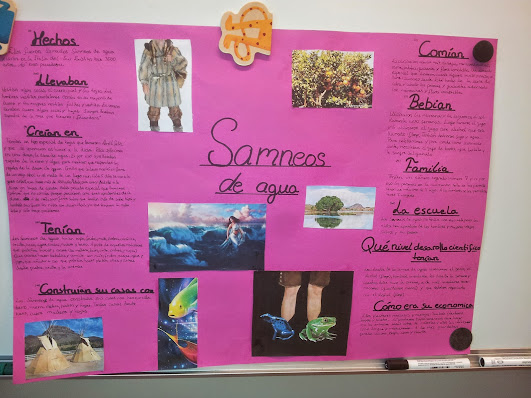
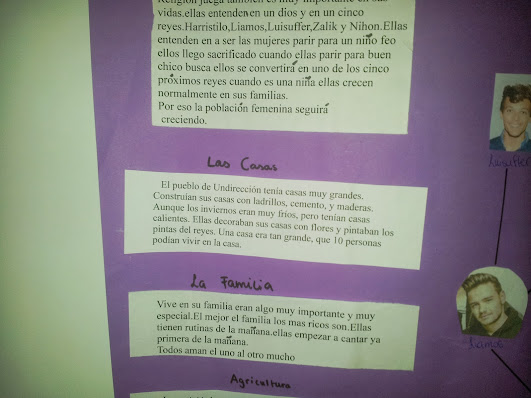
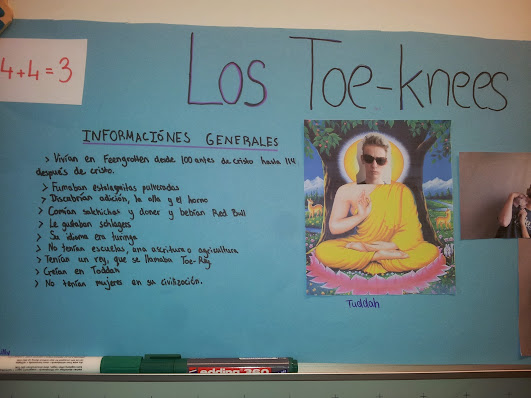
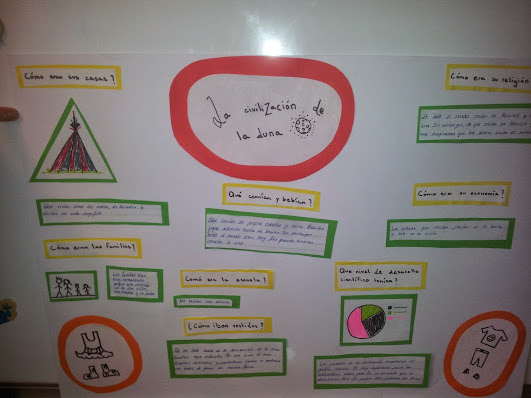
Project: in groups of 2 to 3, students then had to prepare an oral presentation about a past civilization. It could be a real one that had existed before or an invented one. Students had to answer the following questions:
- ¿Dónde vivían?
- ¿Qué ropa llevaban?
- ¿Cómo eran sus casas?
- ¿Qué comían y qué bebían?
- ¿De qué vivían?
- ¿En qué creían?
- ¿Cómo era su nivel científico?
Here are some examples of the posters they created. All of them are invented civilizations:
How to get students to talk about a sport in Spanish for one minute or two?
When reviewing the topic of free time with my grade 9 students (14-15 years old), I decided to spice it up a bit with “different” kind of sports and hobbies such as “el futbolchapas”:
without subtitles
with subtitles
After watching the videos and answering comprehension questions, my students did a reading activity about “El ping-pong de puerta”. You can download the text with comprehension questions here: ping.pong.puerta
My students then had to prepare a short presentation about a different sport. At the end of their presentations, the rest of the class had to ask different questions. I recorded their presentations on Audioboo and told my students they could even use this presentation next year for their IGCSE oral examinations:
Reviewing holidays with IGCSE students
We are now reviewing for the IGCSE speaking examination in less than two weeks time! As I mentioned in an earlier post, I created different boards on Audioboo related to the different topics my students will be asked about. I posted samples of questions and answers which my students recorded in groups so that they can review at home or in the bus or wherever and whenever they want!
To review the topic about holidays, my students brainstormed in groups the questions I could ask them. They wrote them down on a big piece of paper. They then passed their paper to another group who answered the questions: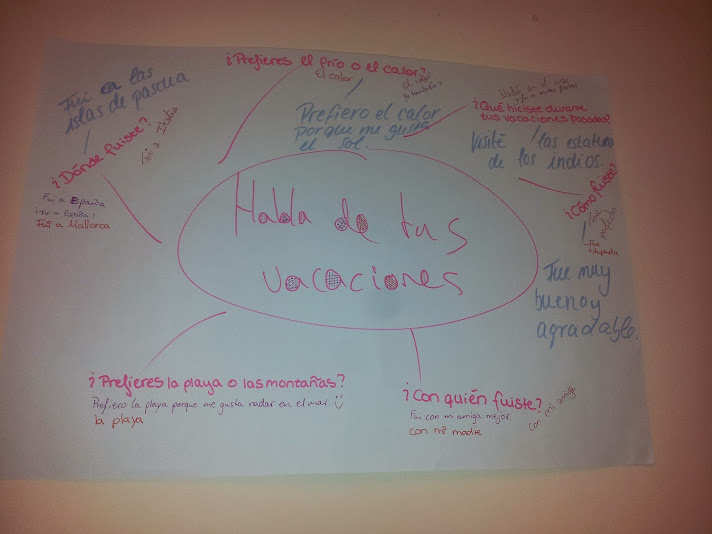
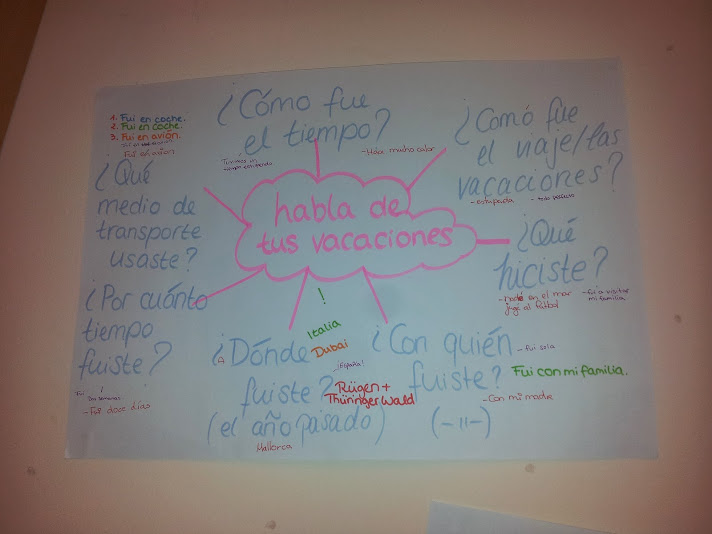
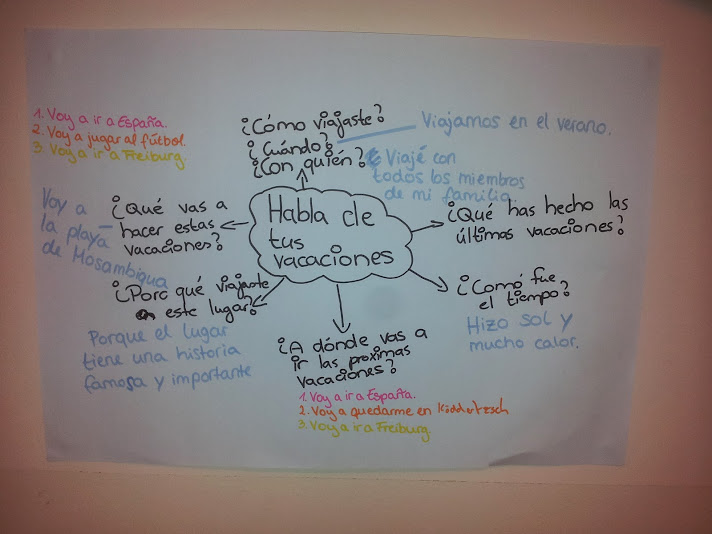
I then showed this video which I found on Difusión ELE (an amazing source for Spanish videos):
I would pause after having listened to each question and answers and I would ask the students about their own answers.
Lastly, students prepared different questions in small groups and recorded them. I posted their recordings on Audioboo:
How to use poems with first year Spanish learners?
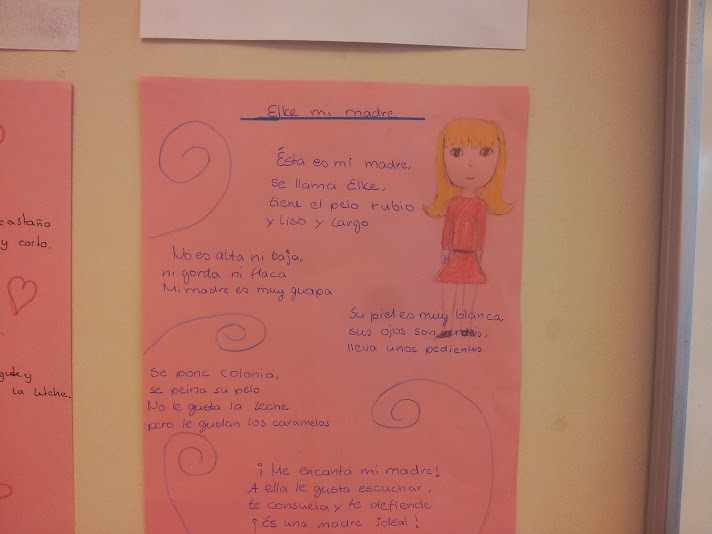
I found this lovely poem on Pinterest and I used it with my grade 6 students (11-12 years old) as it was the prefect review for physical description and family.

Listening/comprehension: I told the poem “TPRS style” by drawing the “abuela” on the board little by little, following the poem description. There was a lot of repetition as I kept asking my students “¿Cómo se llama la abuela?“, “¿Cómo es?“, “¿Cómo tiene el pelo?“…. My students also learned new words and expressions such as “los duros“, “la colonia“, “te consuela“….
Reading/speaking: I then handed out the poem to my students and I read it again as they followed the text. Students then worked in pairs: one would read the start of a verse while the other one would finish the verse without reading the poem. The objective was to memorize the structures as well as focusing on pronunciation. Another activity was to change some of the words in the poem, i.e. instead of “mi abuela“, “mi madre“.
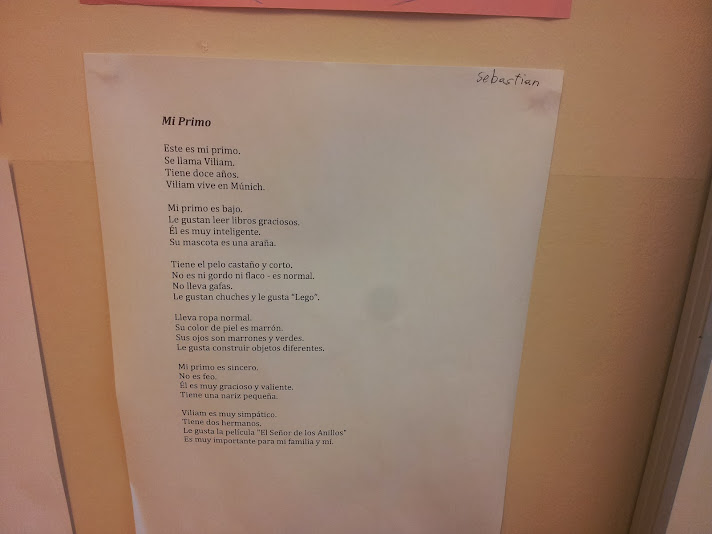
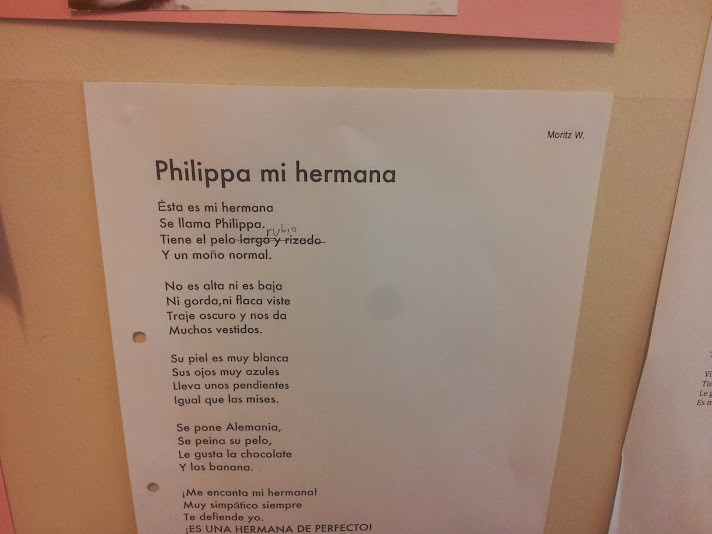
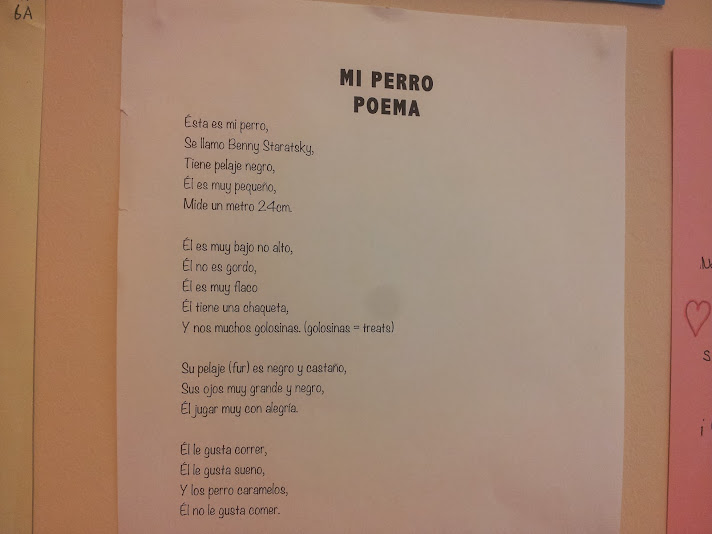
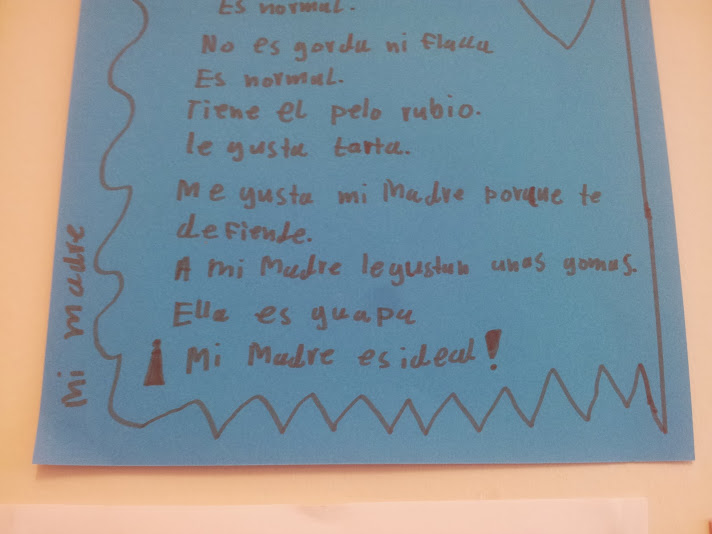
Writing: when the students had mastered the poem, I asked them to write a similar poem about someone who was special to them. Here are the results:
How to use stories written by students?
As I mentioned in my previous post, I am a big fan of The Comprehensible Classroom because there are so many fun story scripts to be used and Martina Bex (the author) shares so many fabulous ideas and lesson plans! One story script I have used with my middle school students (grade 6 to 8) is Buscando Gafas. This script is ideal to practice the three singular forms in the present tense of the verbs “querer” and “tener” as well as “lo” and it fits with the Michel Thomas method which I use once weekly with my classes.
Listening: I first told the story to my students “TPRS style” by drawing what was happening on the board. There was lots of circling as I wanted my students to “internalize”: él/elle lo quiere / No lo tiene / ¿Lo quieres/tienes?.
Reading: I then gave the script of the story (something I should not do if I were a proper TPRS teacher!) to my students to read in silence with comprehension questions. Here is the worksheet to download: buscando.gafas
Speaking: I then gave out “Justin Bieber canta Baby” handout which Martina Bex created and asked students to tell the story to each other in pairs. We first reviewed the key structures and I also wrote on the board the vocabulary they would need to tell the story like like “to sing” or “microphone”. My students thought the story was fun because it involved celebrities they know! You can read how Martina Bex used this handout as well as “Buscando Gafas” and a song “Lo que yo no tengo” here: http://martinabex.com/2011/03/26/you-have-what-i-want/
Writing: I finally told students to write their own stories using the key structures they had learned or reviewed. I asked my grade 8 students (13-14 years old) to first write a draft which I checked and then to write their final version on a mini-book called an Aztec Codex. I took the idea from Clare Seccombe who shares numerous ways of creating your own mini-books.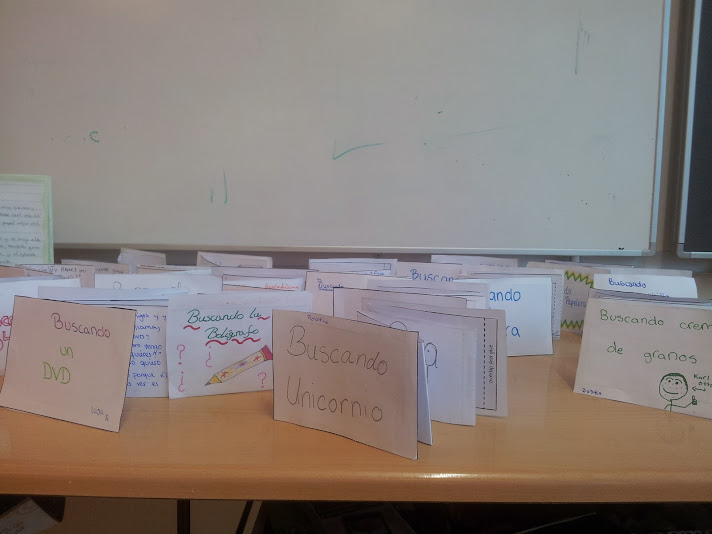
Re-telling: I then thought of reusing the mini-books grade 8 had taken time to create with grade 6 and 7. It was prefect because we had just come back from a week holiday and I knew my students needed some reviewing of key structures. So I told a story I particularly enjoyed entitled “Buscando crema de granos“: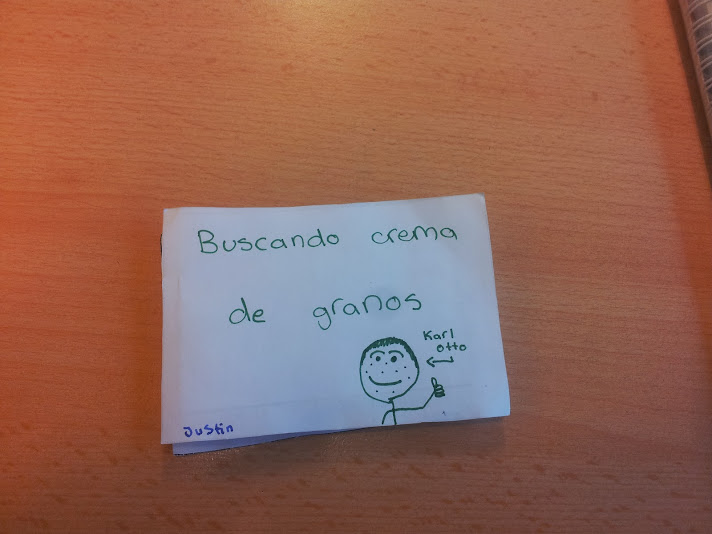
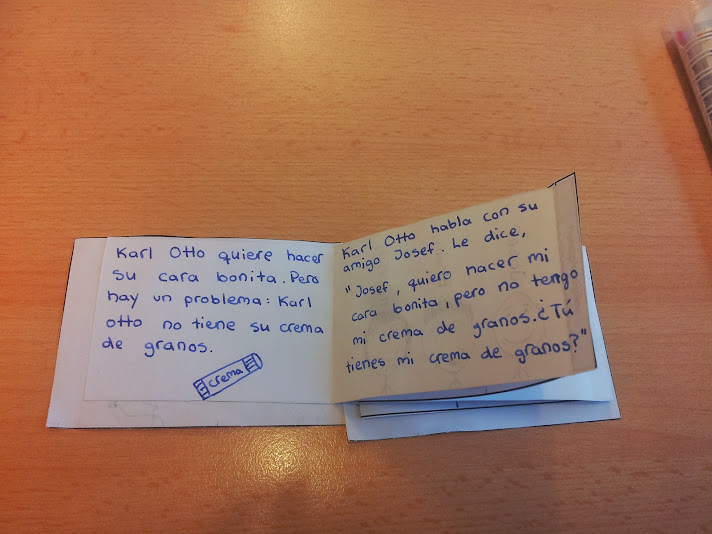
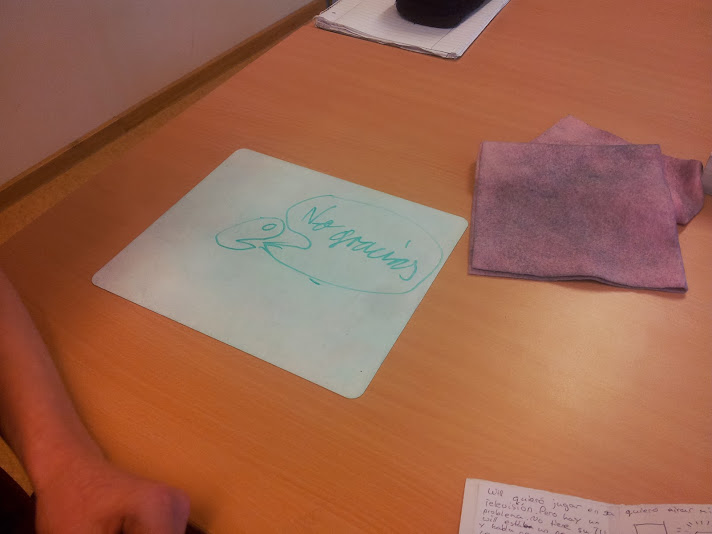
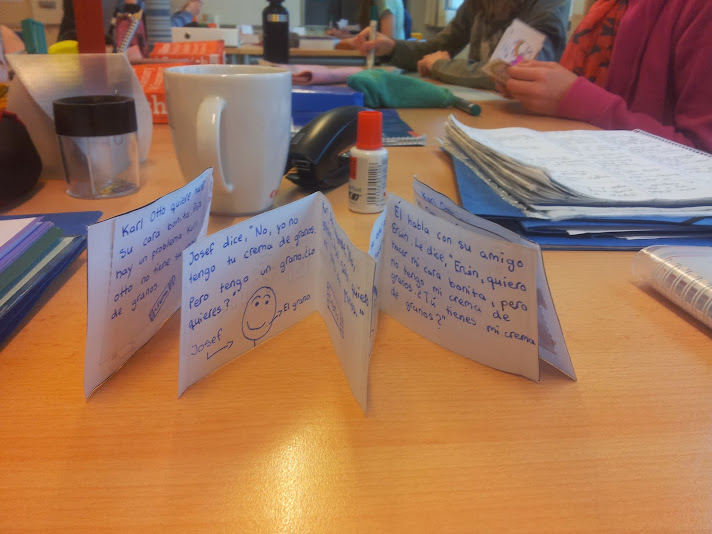 After telling the story and circling the key structures ( this time we didn’t use “lo” but “la” to replace “la crema de granos”), I gave my students the small whiteboards and asked them to draw some key sentences from the story such as “Karl Otto no tiene una crema de granos” or “El habla con su amigo Erwin“…My students were then working in pairs and I told them to choose another story: one would tell it and the other would draw the main scenes. They really enjoyed this activity and there was a lot of Spanish talk going on (without me having to push for it) which was great!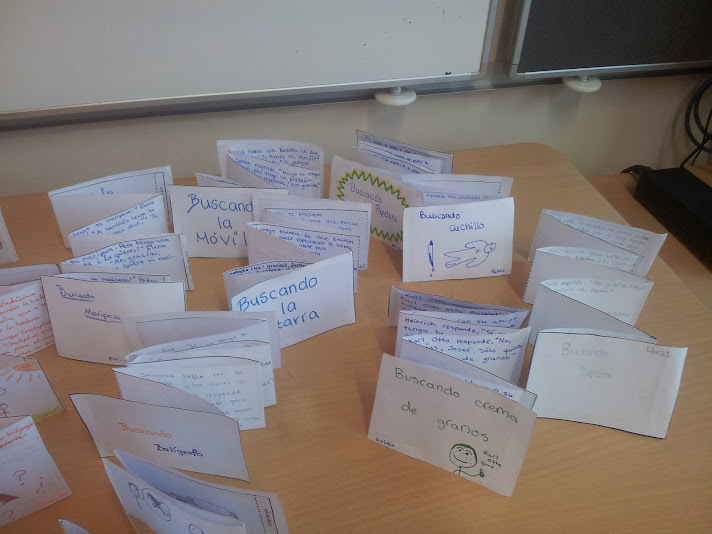
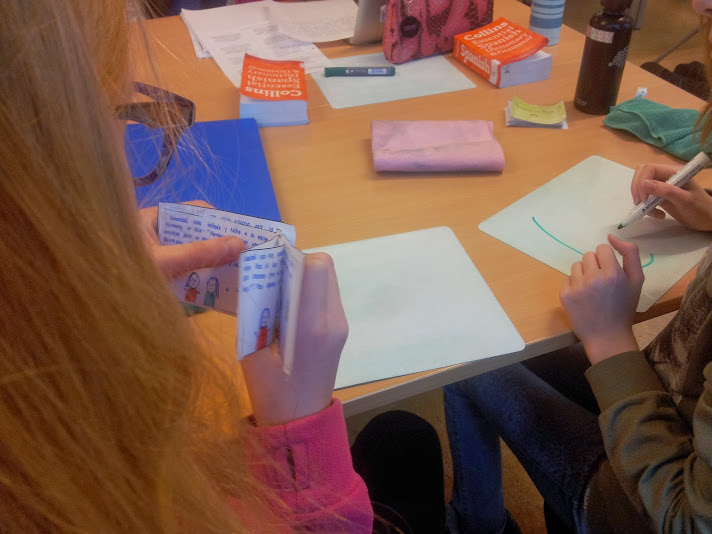
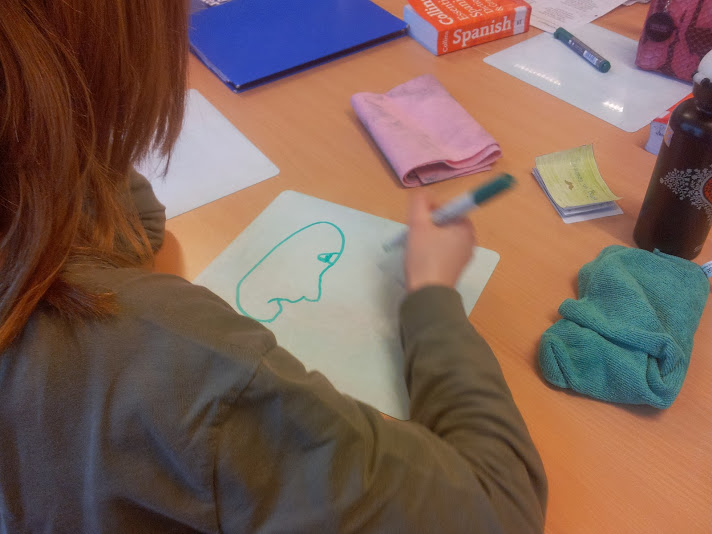
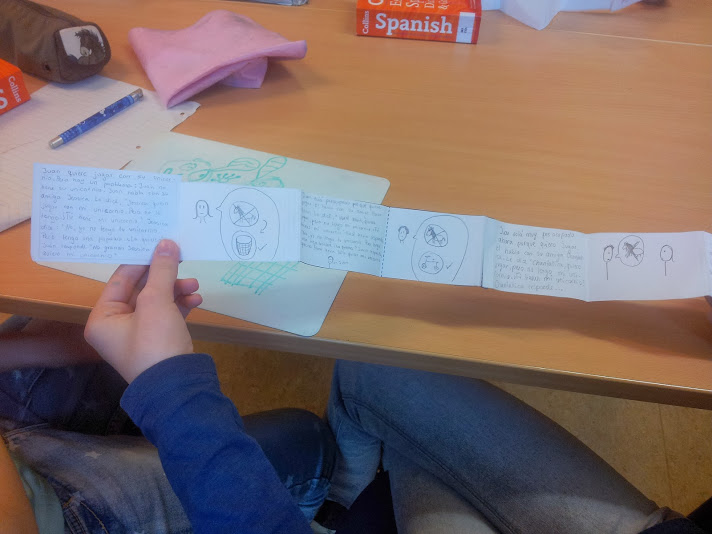
The icing on the cake was when I showed my grade 8 the pictures of grade 6 and 7 reading their stories. They were ever so proud!