Reading to promote language acquisition
A few weeks ago, I was asking you for suggestions to order Spanish books for my school library. Over my teaching career, I have found that reading is a key skill, if not the main skill to learn a language. By reading texts and books, language “acquisition” happens. According to Stephen Krashen “there are two distinct ways of learning language: language “learning” and language “acquisition”. Language “learning” is learning that takes conscious effort on the part of the learner. It is characterized by learning grammar rules, memorizing vocabulary lists, and performing speaking drills. Language “acquisition” is learning that is subconscious and takes little or no effort on the part of the learner. It is characterized by listening and understanding to messages, reading interesting books and articles, and other enjoyable activities that take place in the language being learned. The only thing that can lead to fluency in the language is language “acquisition”. Language “learning” can only be used as a way to consciously edit speech or writing, and it is never the cause of spontaneous, unrehearsed speech or writing.”
Of course, it not easy to find books which will interest students neither it is easy to find books which are at the “right level”: not too simple and not too challenging. After careful consideration and much thought, I have chosen children books which I will read in class. These books are too reinforce key structures. I have also ordered more challenging books which are to be chosen and read by students themselves, in class and at home. I will allocate some time during lessons when students can read in silence for 10 to 15 minutes.
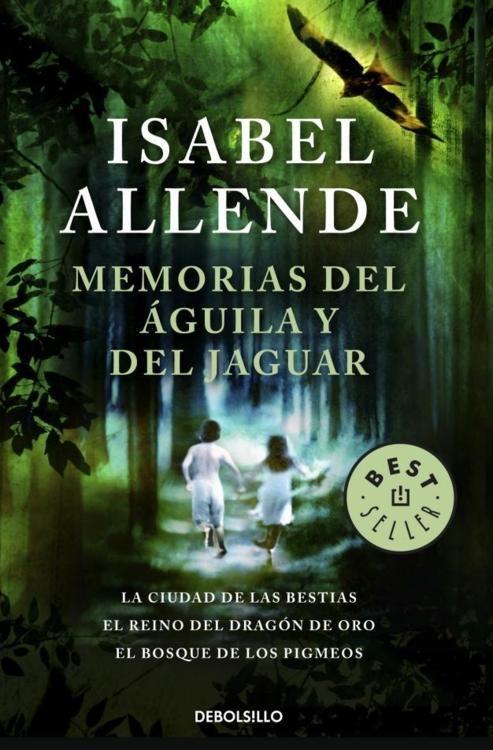
Here is my list:
- Sofia en une aventura por la selva
- Eric & Julieta Series : Como Mama / Es mio / Ahora que? / En el museo / Donde esta Eric? / Desastre en la cocina / todos enamorados
- La ciudad de las bestias / El Reino del Dragón de Oro / El Bosque de los Pigmeos
- Leyendas, mitos, cuentos y otros relatos aztecas
- Viajes fantasticos
- Pobre Ana / Patricia va a California / Casi se muere
- Quienquiera que seas
- Abuelita fue al mercado
- Mis amigos
What do you think? Any suggestions are welcome!
Vizify: interactive infographics that show the best of you.

This evening, my dear mum shared a cool web tool to present yourself in the best way possible! Vizify is “a new kind of personal website based on the best of your social media content. It’s effortless, always up-to-date, and looks great.” And yes it is true, it is effortless to create a beautiful infographics of yourself in minutes. All you have to do is to plug in your social media sites and Vizify will do the job. Of course, once Vizify has created your bio, you can make it look better by editing it very easily. Here is what my bio looks like without any editing and it is pretty accurate: https://www.vizify.com/alice-ayel
I think it can be another form of a CV but way more attractive than a pdf file!
What do you think?
Spanish story script number 3: ¿Dónde está mi cuaderno pequeňo?
Here is another Spanish story script which follows the last two stories about little Pedro. It gives an excuse to go through the objects in the school bag again and it introduces another key question “¿Dónde está?” as well as two -ar ending verbs “buscar” and “encontrar“. It also teaches students the key phrase “No lo sé” which can be useful in any circumstances! After having read the story to the class, students could enact the story by changing the little notebook to something important to them and by going through each student in the class asking the same question “¿Dónde está mi…?“. This could be a great practice as well as a fun way to keep the class speak in Spanish.
3. ¿Dónde está mi cuaderno pequeňo?
Key structures:
-
Es muy importante – It is very important
-
Para – For
-
Busca – He looks for
-
Encuentra – He finds
-
¿Dónde está? – Where is?
-
No lo sé – I don’t know it
Script:
Pedro tiene un cuaderno pequeño. Es muy importante para Pedro. Una mañana, Pedro saca sus cosas de su mochila. Primero saca su estuche. Abre su estuche y saca su bolígrafo, su lápiz, y su goma. En segundo lugar, saca su regla porque es muy grande y no cabe en su estuche. La Señora Martinez dice “¡Clase, sacad el libro de matemáticas!”. Entonces Pedro saca su libro de matemáticas de su mochila. Luego Pedro quiere sacar su cuaderno pequeño porque es muy importante para él. ¡Lo busca en su mochila pero no lo encuentra!
Pedro pregunta a Elena “¿Dónde está mi cuaderno pequeño?”. Elena dice “No lo sé.” Pedro busca en su mochila otra vez pero no encuentra su cuaderno pequeño. Está muy preocupado porque su cuaderno pequeño es muy importante para él.
Pedro pregunta a Javier “¿Dónde está mi cuaderno pequeño?”. Javier dice “No lo sé.” Pedro busca en su mochila otra vez pero no encuentra su cuaderno pequeño. Está preocupado porque su cuaderno pequeño es muy importante para él.
Entonces Pedro pregunta a Pilar “¿Dónde está mi cuaderno pequeño?”. Pilar dice “No lo sé.” Pedro busca debajo de su mesa pero no encuentra su cuaderno pequeño. Está muy preocupado porque su cuaderno pequeño es muy importante para él.
Pedro pregunta a Juan “¿Dónde está mi cuaderno pequeño?”. Juan dice “No lo sé.” Pedro busca debajo de su silla pero no encuentra su cuaderno pequeño. Está preocupadísimo porque su cuaderno pequeño es muy importante para él.
Entonces Pedro llora. Llora mucho. La Señora Martinez pregunta “¿Por qué lloras Pedro?”. Pedro dice “¡No sé donde está mi cuaderno pequeño!”. Entonces la Señora Martinez saca un cuaderno pequeño de su bolsa y dice “¿Es este cuaderno pequeño Pedro?”. De repente Pedro para de llorar y dice “¡Sí, es mi cuaderno pequeño!”. Señora Martinez le dice a Pedro “Lo habías olvidado ayer en tu mesa.” Pedro sonrie y le dice a la Señora Martinez “¡Muchísimas gracias Señora Martinez!”.
Questions:
-
¿Por qué el cuaderno pequeño es importante para Pedro?
-
¿Tienes una cosa muy importante para ti?
-
¿Qué sacas de tu mochila primero / segundo / tercero?
Textivate to make puzzles and activities out of any text
I have just come across Bryan Kandel’s website and he has highlighted a few useful web tools to use in the classroom. One of them is Textivate which is Taskmagic web-based little brother. Ten years ago, when I started teaching Taskmagic was the one software we used in the classroom and language teachers just loved it! Time has fast forwarded and Taskmagic now looks a little outdated even though it can still be very useful to create multiple interactive exercises. Textivate is also a useful web tool to keep under your sleeve when you want to create quick fill in the gaps type of activities or games such as “Who wants to be a millionaire?”.

For example I entered the Spanish story script I did a few weeks ago about Pedro first day at school and Textivate created 31 activities and games in less than a minute! The only downward point is that I couldn’t save them, nor share them because I would need to pay a yearly subscription. I can still see its usefulness in the classroom with a smartboard or just a projector and a whiteboard. After reading my story, I could quickly have one textivate activity on the board for students to practice and check their understanding of the story.
What do you think? Are you using Textivate?
Yoga during homeroom time
I have become a yoga fan because it has benefited me a lot during this past year. I can see the benefits for anyone, especially youngsters who are going through difficult stages in their lives: body changing, hormones kicking, big exam time… When I have a homeroom (or form in English from England!) next year, I would like to try some yoga poses with my students and give them some yoga tools to relax and control themselves and overall to help them cope with change. By researching on the Internet, I found a page listing all the benefits yoga can bring to children. Here are some:
Body:
- Assists neuromuscular-development
- Increases balance, body awareness and coordination
- Improves posture and alignment
- Develops core strength, essential for good posture and correct physical alignment
- Strengthens the immune system
- Relaxes the body, promoting better sleep
Mind:
- Calms and clears the mind
- Relieves tension and stress
- Increases concentration, focus and attention span
- Promotes thinking and memory
- Stimulates auditory processing and responsiveness
- Expands imagination and creativity
- Reduces stress and anxiety
- Balances energy (high or low)
Spirit:
- Builds confidence and self-esteem
- Supports character development and emotional intelligence
- Enhances team skills and social interaction
- Develops discipline and self-control
- Inspires respect for self and others
I also found some helpful videos made by Dona Freeman who has been teaching yoga to kids and teenagers in schools and home settings since 2002. Her videos show how to apply yoga in a classroom where you don’t have any yoga accessories. For example she shows how to do a downward facing dog with a chair:
Or how to do the ragdoll pose without or with a chair. This pose can be a great reliever before an exam:
These are the kind of activities I would like to try with my students next year.
What about you? Have you tried yoga in your classroom?