Spanish story script: se vende
This story comes from the wonderful Martina Bex who posts so many brilliant ideas and resources on her blog. I started a new unit with my grade 6 class which is about going shopping and this story fitted perfectly!
Speaking/vocabulary: I first started by introducing the different shops to my students using this slideshow: SHOPS. I wanted my students to see a pattern which is that most shops in Spanish end with the suffix -ría. And if they are not sure, they can still explain what the shop is selling by starting their sentences with “la tienda de…“. I think it is very important for language learners to make connections and discover patterns.
Reading/ vocabulary: students matched cards. They matched the shops with the products they sell: Shops + Products Cards. They then filled in this worksheet to consolidate the new vocabulary and also to use object pronouns which we have been using since the start of the year: Las_tiendas.
Listening/ speaking: I then told the story “Se vende” asking the students lots of questions to repeat and reinforce the key structures and vocabulary they had just acquired (“TPRS style”). The target structures were:
- se vende – is sold
- está de moda – in style
- compra – buys
Speaking: students first matched cards I created on Quizlet. They had to match the Spanish structures with their English translations. Using the cards, they had to tell a similar story to the one they had just heard.
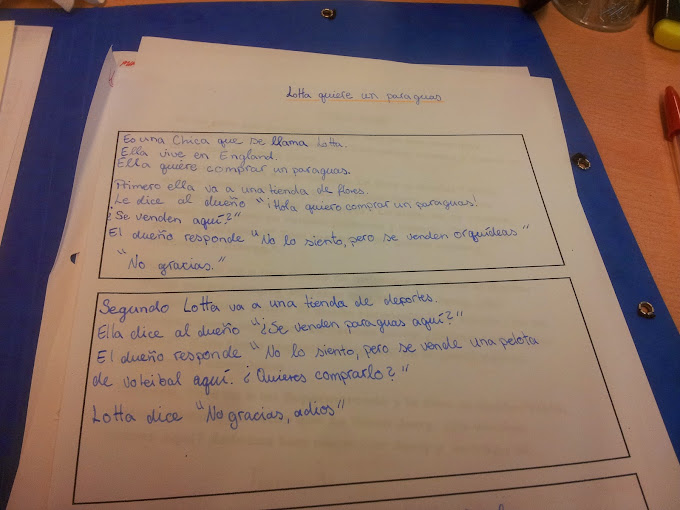
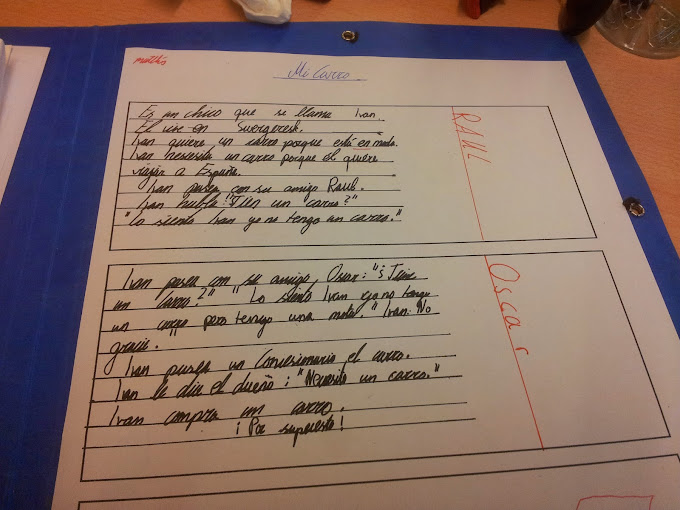
Writing: the final task was to write a story using the structures they had learned. A few weeks later, I was super happy when a few of my students used “está de moda” in another written task. They had do describe someone and they used this expression to explain a hair cut or a hobby: tiene el corto porque está de moda…
Spanish video: ¿Qué hiciste ayer?
The Spanish channel SGEL ELE Español para extranjeros is a goldmine for comprehensible videos with vocabulary and structures related to the IGCSE course. My grade 9 students watched this video about a Saturday night which lead to a fun project!
Speaking: Before watching the video, the lesson started with a conversation about parents versus teenagers and if parents should let their children go out late on a Saturday night. The verb “dejar” and the expression “dejar salir” were practiced:
¿Tus padres te dejan salir con tus amigos?
¿Puedes salir tarde un sábado por la noche?
¿Tus padres te dejan salir hasta muy tarde?
¿Hasta qué hora te dejan salir tus padres?
¿Crees que es justo o injusto?
¿Qué hiciste el sábado pasado? (this question introduces the video).
Listening: students then watched the video first with subtitles and general comprehension questions were asked after the first viewing. Students then watched the video a few more times without subtitles and filled in the listening worksheet which you can download here: video.que.hiciste.ayer
By filling in the missing verbs, students also practiced the verb forms in the pretérito indefinido.
Speaking: students worked in groups and prepared a video about a similar situation. Students could choose whether the parents were OK with the situation or whether they were upset about their child coming back late on a Saturday night.
Spanish curriculum: scope and sequence
It has been a challenging school year in terms of timetabling and workload but the one thing which I am very pleased with is that I have managed to write all the scope and sequence documents for all grades and levels (yeah!), which means I more or less know which topics and structures I am going to cover with my classes over the years!

Here are the documents to download or you can also access them from my curriculum wiki:
Grade 6 Spanish curriculum
Grade 7 Spanish CurriculumGrade 8 Spanish Curriculum
Grade 9 Spanish Curriculum
Grade 10 Spanish Curriculum
Grade 11 ab initio Spanish Curriculum
Grade 12 ab initio Spanish Curriculum
Grade 11 langB Spanish Curriculum
Grade 12 langB Spanish Curriculum
The perfect song to use the past tenses in Spanish!
I love using songs in my lessons and I found out that my students enjoy it too! Apparently some of them even buy some of the songs! When we listen to a song in class, we listen to it several times in the week at the start of each Spanish lesson. My students know they have to take out the lyrics (in Spanish with the English next to it), to listen to song and to follow the lyrics at the same time. The following week, I usually give my students a quiz with gaps to fill in. It is a good listening task and by listening to the same song over and over again, not only they acquire new vocabulary and structures, they also get a good intonation and pronunciation.
This song “Sheila Down” is perfect to practice, review and/or reinforce the imperfect tense. The singer, Sheila Blanco pronounces the lyrics very clearly and the story is great for teenagers. It leads to many questions about the woman in the song: what happened to her? Why was she killed in the shower? Who was her boyfriend?…I also make my students highlight the verbs in the preterite and in the imperfect tense and this leads to understand when we use those two different tenses in the past. Here is the song:
And here are the lyrics to download: sheila.down
And here is the quiz:sheila.down.quiz
Spanish story script: los hipos de la llama
I used this lovely story which I found on the TPRStorytelling website:

Speaking: First I wanted to introduce Latin America to my grade 7 students (12-13 years old) and to teach them vocabulary related to geography. Therefore I placed a big map of South America on the classroom board and asked several questions to situate the countries “¿Dónde está Chile? / ¿Está al sur/ al norte / al este / al oeste de Argentina? / ¿Con qué paises limita Argentina? / ¿Cómo se llama la capital de Ecuador?“. Not only the students practiced the key structures to situate countries and cities, they also developed their geography skills and got to know better the American continent.
We then reviewed the nationalities looking at patterns : peruano / chileno / mexicano …. You can download the nationalities worksheet here which I found on the Spansih4teachers website.
Listening: when students could situate the different countries of Central and South America, I then introduced the key structures and verbs of the story: “puede / sirve / tiene hipos“. I actually found several Quizlet flashcards to practice the key vocabulary of the story:
I then told the story asking the students lots of questions to repeat and reinforce the key structures and vocabulary they had just acquired. You can use those pictures to tell the story: CMas-ch6-ST-mainstorypics
Speaking: in pairs and with a map of South America and puppet fingers, students had to re-tell the story. Of course, they could change some facts and characters but they could not write any notes down. They key structures were written on the board and they had to remember the sequences of the story. They did a great job at re-telling the story just by “head and heart” and not with any written notes.
Reading: I then gave them the story to read with comprehension questions which you can download here: CMas-ch6-ST-mainstory-reading-questions
Writing: the final task was to write their own version of the story which they did so well!!!