Little chocolate and walnut stars
- 500g fine semolina
- 10g yeast
- 100g caster sugar
- 50g melted butter
- 1 glass of water
- 125g dark chocolate
- Walnut kernels


Wikipedia: should we use it?
Our students use Wikipedia to research. However it is still largely criticized and even banned by some educators. One day when my students were preparing a presentation about a South American country, they asked me if they could use Wikipedia. Some teachers had actually banned them to use it because according to them it was not accurate enough and nobody checked its accuracy. I was gobsmacked and again had this bubble feeling!

” alt=”Wikipedia” width=”500″ border=”0″ /></a><br />Via: <a href=”http://open-site.org/“>Open-Site.org</a>
Learning the different French Christmas traditions
Since this week should be the last teaching week before the awaited holidays, I thought I would share some ideas and links to how Christmas is celebrated by the French.
In Provence, there are many local traditions. This short video explains all the symbols of the Provencal Christmas table and meal with French subtitles:
I also created a presentation about the song Bons baisers de Fort de France by La Compagnie Créole. This song shows how the French Caribbean Islands celebrate Christmas and it is also an opportunity to learn about the French Antilles.
Beer and gingerbread rabbit stew
If you do not understand French, I will explain the recipe above to you. Ingredients:
- 40g butter
- A whole rabbit cut into pieces
- 2 onions sliced
- 150g lardons (bacon strips) (I omitted them and it still tasted good!)
- Bay leaves
- 45g sultanas
- 40g prunes
- 50cl brown beer (but I used lager and it worked fine)
- 50g gingerbread
Melt the butter and cook the rabbit pieces until golden.
When golden, take the rabbit pieces out of the pan and cook the onions along with the lardons for a few minutes until melted.
Lay out the rabbit pieces on top of the onions and lardons.
Then add the bay leaves, sultanas, prunes, the beer and finally the crumbled up gingerbread to the pan.
Do not worry about the gingerbread. If you don't have any at hand or if you don't like it, use any kind of bread; this will help to thicken the sauce.
Cover and cook for up to one hour and a half until the meat is tender. Uncover for the last half an hour so that the sauce thickens.
Serve with braised endives (the Belgium way!) or with fresh pasta (like I did!).
Perfect for a Sunday lunch or a dinner with friends (if they like rabbit!).
Next recipe I want to try is the caramelised pork (again with the help of my cocotte!):Other recipes involving meat on my blog:


Mary Glasgow magazines
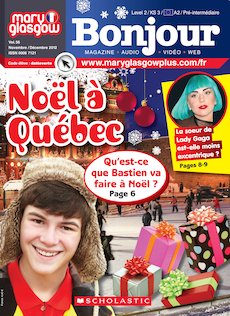
Some time ago I wrote a post about the Mary Glasgow website and how I used its free Spanish articles and audio versions. Last week I received several French sample magazines and the “Bonjour” one aimed at pre-intermediate learners caught my eye. The cover page is about Christmas in Québec. Since we are getting ready for Christmas here in Germany with the Advent markets going on in every towns and cities, I thought this would be a great reading activity for my little French student. The article is an interview with Bastien, a 14 years old boy who lives in Québec and explains what he is going to do during Christmas. The focus is on the near future tense and although my student is not so advanced (she can only use the present tense so far), I thought I could give it a try.
What I like about Mary Glasgow magazines is that they always come with a little booklet for teachers with different examples of lesson plans for each article in the magazine. Each lesson plan is detailed with objectives and then with different activities either focusing on speaking or on reading and writing skills. In the case of the article about Christmas in Québec, here are some activities I could do with my student:
- draw a list of all the French words related to Christmas or a celebration she already knows.
Then, look at the pictures on the article and describe them using the words from the list. - introduce the near future tense: aller + a verb in the infinitive form and then read the article and highlight all the sentences with the near future tense.
- have a conversation asking questions about Christmas plans. To make it easier and also to use the near future tense, my questions would follow this pattern: Bastien is going to decorate his house. Are you going to decorate your house? = Bastien va décorer sa maison? Toi, tu vas décorer ta maison?
The other great bonus is that the magazines and booklets come with a code to access videos, activities and resources on the website. Thanks to Mary Glasgow’s ideas and articles, teachers are able to plan engaging lessons linked to the francophone culture as well as to key structures. Learners can also benefit a lot from reading the magazines. I subscribed to the Spanish ones and whenever I want to help a student on a one to one basis, I ask the other students to read one of the magazines according to their levels. I can see they really enjoy reading the articles because they relate to their interest. They also like completing the little quizzes at the end of the articles. The answers come at the end of the magazine so they can check their comprehension skills on their own. It helps develop their independence and confidence. Some students have said to me: “Wow, I can read a magazine in Spanish!”.
What about you? Do you use Mary Glasgow? How?