How to help students use Google Translate efficiently?

Recently, I stumbled upon a great blog to follow if you are considering flipping the Spanish classroom. I started to read the latest post about Google Translate and I could not help but start to cringe! I have to admit that as soon I read or hear that a device or a tool should be banned, I become quite irritated. José Picardo resumes better than I would ever do what I believe is The Totalitarian state of education: “Like most totalitarian states, schools generally take a hard line stance against the proliferation of new social media. As a result, like citizens in most totalitarian states, students soon find ways to circumvent the restrictions placed upon them and continue using social media under the radar. The totalitarian school believes it is protecting its citizens, although, in reality, by choosing to ignore the ubiquity of social media in students’ daily lives, schools are simply creating the illusion of safety. In fact, many schools are simply looking the other way. They have chosen not to want to know.”
Coming back to Google Translate, as I commented on Sra. Witten’s blog, I do not think that the answer is to forbid students to use it (because they will use it no matter how). The answer is to train students to use Google Translate wisely and efficiently. The same applies to Wikipedia, as I mentioned in a previous post, as to any other devices such as mobile phones or web tools. Now the big question is how to teach students to use Google translate properly? My comment on Sra. Witten’s post lead to other comments asking this same question. Most language teachers work hard to teach students how to use a dictionary properly, but is it the same as to use Google Translate? It differs in many ways and the first thing to acknowledge in my opinion is that it is not a dictionary, it is a powerful translator which offers four main tools areas:
- Translation
- Translated Search
- Translator Toolkit
- Tools and Resources
I do use the translation tool myself when trying to write an email or letter in German and I do agree that it can be misleading. However my dear man taught me a trick: to translate the German version again in English to see if it makes sense. With my basic knowledge of German, I can still spot translation mistakes and try to correct them. Maybe this is a way to guide students?
I also searched on the web for some tips on to use Google Translate properly and found an interesting article on About.com on how to use Google Translate to teach English. Here are some activities which could be tried with students:
- Have students write short texts in the target language, and translate them into English. Using Google Translate for translation can help students catch grammatical errors by spotting these errors in the translations.
- Provide your own short text and let Google Translate into English. Ask students to read the translation and then try to come up with the original text.
- Use authentic resources, but provide the URL and have students translate the original into English. This will help out when it comes to difficult vocabulary. Make sure that students use Google Translate only after they have first read the article in the target language.
Now, as I mentioned above I would not use Google Translate as a bilingual dictionary but as a tool to help writing texts and reading authentic resources. I would recommend using Word Reference as an online dictionary. Madame Aiello wrote a post about it with good ideas on how to use the forum links.
What about you? How do you use Google Translate with your students?
Other posts you may enjoy reading:
Crepes party!
We are in the midst of the pancakes (crêpes in French) season before the start of Lent (for Christian believers). In France, we have crêpes twice. First on the 2nd of February to celebrate la fête de la Chandeleur which commemorates the presentation of Jesus at the temple. The French say: “Quand la Chandeleur est claire, l’hiver est par derriere; Chandeleur couverte quarante jours de perte” which more or less means: “If February 2nd is clear, no more winter to fear; if the Chandeleur is overcast, forty days winter to last.” But then they also say: “Soleil de la Chandeleur, annonce hiver et malheur” which is “A sunny Candlemas will bring winter and misfortune“. So you could choose whatever saying suits you!
The second time we have pancakes is during Mardi Gras which this year will fall on the 12th of February. It refers to the last night of eating richer, fatty foods before the ritual fasting of the Lenten season, which begins on Ash Wednesday. When I was younger and used to live in Paris, Parisians dreaded this particular day because it meant having eggs or flour thrown at them when walking down the streets! I do not know if this tradition is still alive but it was fun… If you were the thrower!
Crêpes are easy to make, require a few basic ingredients and are enjoyed by everybody. Well… I don’t know anybody who doesn’t like crêpes?!
Apart from those two special days, we have crêpes parties once in a while in our family. We put all kinds of toppings on the table from plain sugar to nutella to caramel sauce… For everybody to choose from. We also have apple juice for the children and good old cider for the adults as the best drinking accompaniment and I find it is actually one of the best cheering up thing to do during a long, cold and dark wintry day.
I usually double the ingredients from the following recipe as my boys are good eaters and a bit greedy!
You need:
- 250g flour
- 3 eggs
- 3 tbs melted butter (I melt it in the microwave)
- milk
- a pinch of salt
Mix the flour and salt together and add 250ml milk. Mix with a wooden spoon.
Add the eggs one by one or beat them first and add them to the flour mixture.
Add the melted butter.
Then add about 500ml milk little by little until you have a batter that is the consistency of slightly thick single cream.
Let it rest for about an hour (but I have heard to day on the French radio that there is no need for that).
Add a small glass of lager into the batter.
Heat a pan over a high heat, then wipe it with buttered kitchen paper.
Ladle some batter into the pan, tilting the pan to move the mixture around for a thin and even layer.
If the pan is the right temperature, the pancake should turn golden underneath after about 30 secs and will be ready to turn.
Hold the pan handle, ease a fish slice under the pancake, then quickly lift and flip it over. Cook for another 30 secs before turning out onto a warm plate.
Continue with the rest of the batter, serving them as you cook or stack onto a plate.
Goal 11: Feel The Weight of Your Impact #30GoalsEdu
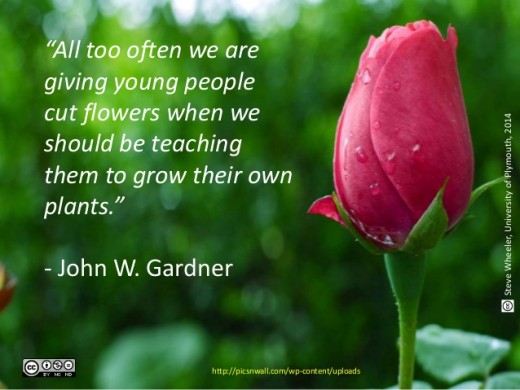
I posted this picture a few years ago and instantly remembered it when pondering on goal 11 of the 30 goals challenge for educators 2012.
Goal 11 is about impacting our students. As Shelly Terrell mentions in her blog:” Educators don’t realize that every time they walk into a classroom they plant seeds that may grow into weeds and stunt their students’ learning journeys…“. I would rather think that we plant seeds that will grow into the learners own beautiful flowers and plants.
When reflecting on the positive impact I try to have on my students, my main target is to get them to enjoy discovering a new language and therefore a new way of thinking and a new culture. I want my students to become open-minded and world citizens. I do realize it is a “big word” but I do believe it is key nowadays. Thanks to the Web and social networks, we are connected to other people worldwide and it is very important to be flexible and opened.
Another positive impact is to get students to become fluent in another language. The aim here is fluency and not accuracy as Steve Smith writes in a very interesting post Accuracy versus fluency. I aim at including lots of comprehensible input and at becoming “a listener rather than a correcter“. Acquiring a new language tends to be stressful because it is all new from the pronunciation part to the actual input. Students often fear to not understand anything and as a language teacher, my aim is to make them feel safe and relaxed in order to cope with the “newness”. Therefore as Steve Smith mentions in his blog “The focus on accuracy merely helps students develop their ability to monitor their own accuracy and to self-correct. Worrying about getting things wrong sets up an affective barrier for students and inhibits their language acquisition. Comprehension and fluency tasks remain the heart of language acquisition.“. Once students become comfortable in a new language (even if they do make mistakes), we can then shift our focus towards accuracy.
All in all, the good seeds I wish to plant throughout my students’ learning journeys are to discover something completely new and to have fun learning.
What about you? What kind of impact are you aiming at having on your students?
Other goals I have accomplished so far:
- Me manifesto
- Highlight of my magical moment
- Ask a learner and reveal their strengths
- Feed yourself inspiration
- Investigate and instigate questions
- Make a global connection
- Share an activity
- Teaching ourselves and them to overcome
- Spread your knowledge
Playing to learn a language?
I recently went through Maria Andersen presentation Playing to learn?:
My eldest son, Louis who is now seven years old and is in first grade is absolutely eager to learn about anything and I know that his classmates are as eager too. However this situation turns out to differ completely whith upper school students. They are often bored, cannot be bothered and don’t seem to enjoy to learn. Well… in my opinion, they don’t like “formal learning” and it’s fairly hard to get them hooked on a topic. Maria Andersen who teaches maths tells us in her presentation that some of her students “can’t seem to learn algebra but CAN seem to learn complex video games that require logic, memorization, and teamwork, and strategy“!
Playing games is fun and learning should be fun, especially learning a language. Students should feel relaxed when acquiring another language.
According to Wikipedia “key components of games are goals, rules, challenge, and interaction. Games generally involve mental or physical stimulation, and often both.”
I do think that language teachers try to incorporate many speaking and memorizing games in their lessons, but why not playing board games in the target language? In that aim, I have created a new board on my Pinterest account entitled Games/Jeux /Juegos where I intend to pin any kind of games students could play. Not only will they improve their fluency, they will also be engaged into the learning process. Besides, this suits the flipped classroom concept perfectly: students watch lectures and explanations at home. They could even watch or read and grasp the rules on how to play a certain game at home. They then play and interact in class under the teacher’s guidance.
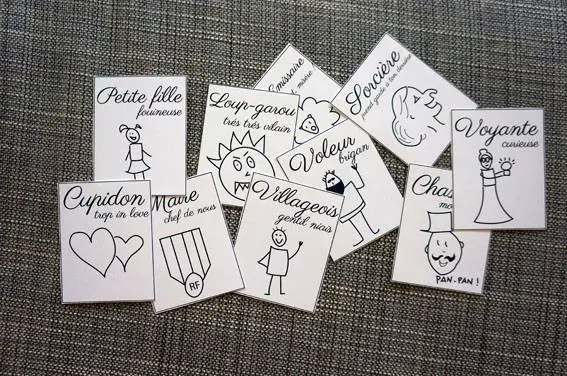
As an example, one game I would try in French would be le jeu du loup garou which is a cards game with different characters. Students could read the rules at home on Wikipedia and then play it in class.
What about you? What kind of games do you play in class?
A delicate salmon curry


I had salmon fillets in my freezer and wanted to change from the usual “straight to the oven” recipe. My dear sister who lives in London is a big fan of Nigel Slater. As a Christmas present, she gave me his latest cookbook The Kitchen Diaries II. I therefore searched for a salmon recipe and found a mild and fruity curry of salmon which sounded and looked perfect to me. I already had all the ingredients listed, except for the tamarind paste which I omitted. Besides, it was dead simple to prepare: just add all the ingredients and let the flavours melt and become fragrant!
You need:
- salmon fillet, skinned
- a large onion
- mustard seeds – ½ tsp
- small hot chillies – 2
- ground turmeric – ½ tsp
- ground cumin – a teaspoon
- ground coriander – 1 tsp
- tomatoes – I used chopped tomatoes from a tin
- 80ml water
- tamarind paste – 1 tbs (I omitted it and it worked fine)
Cut the salmon into thick cubes.
Peel the onion and chop it finely, then let it soften in the oil in a deep, non-stick pan.
When it has started to colour lightly, add the mustard seeds, finely chopped chillies, the turmeric, cumin and coriander and stir over for a minute or so.
Add the chopped tomatoes to the pan and leave to soften for a minute or two before pouring in the water.
Stir in the tamarind. Bring to the boil then turn down to a simmer.
Leave for 10 minutes before adding the pieces of salmon, some salt and black pepper.
Now leave to cook for 10 to 15 minutes until the salmon is completely opaque.
Pour in the coconut milk and simmer for further 4-5 minutes.
Serve as it is, or if you wish, with fluffy rice.
You may also want to try the coconut dahl which is vegetarian and delicious (of course!).