French news: focus on the meaning rather than the form
Coucou les membres de la communauté,
You know it: receiving comprehensible input is powerful. It is the key to unlocking your French fluency.
You know it too: the journey to mastering French is challenging.
The good news is that input alone is sufficient to first understand, then think, and eventually speak French naturally.
By immersing yourself in comprehensible French content, whether it’s through reading, listening, or watching, your brain gradually starts to make connections and patterns. Over time, you find that you’re able to process the French language with ease.
#trustheprocess
The need for more
However, I do know that some of you feel they need more. If that’s the case, I have I believe an efficient solution for you: answering comprehension questions about a story.
Comprehension questions are useful because they help you improve your understanding of the language by focusing on the meaning of the text rather than just the grammar or vocabulary.
You actively demonstrate your understanding of the content. This helps cement the meaning and context of the language you are acquiring.

Try answering the questions about the peacock and the stolen feathers – Les plumes volées
First go through the Baby Stage session #14 which tells a simplified version of the story. You can watch me telling the story to help you understand it.
Then read and listen to the more complex version of the story written in the past tense. Make sure to turn on the Audio Sync View button.
At the end of the story, answer the questions. For most of the questions, you simply need to answer with a “oui” or “non“. This way, you are forming full positive or negative sentences, assimilating the way French sentences are structured. This encourages you to construct full French sentences, which helps you internalize proper sentence structure and grammar.
Check out the answers to the questions by clicking on – Cliquez ici pour afficher la solution –
I am eager to hear your feedback on whether this resource is useful for you. Your input helps us (My Dear Man & I) refine and improve our materials, ensuring that they meet your needs and preferences.
This Week’s Live Sessions
Now, let’s talk about the exciting live sessions planned for this week:
- Wednesday:
We’ll be reading, discussing, and writing in the past tense the story of the toe – Le doigt de pied. This is a great opportunity to enhance your French in a supportive and engaging environment. - Thursday:
We’ll be discussing where we live and how we feel about our living situations. Share your thoughts and experiences with the group, all in French.

There are still a few spots left for these two live sessions, so click here to sign up soon. I can’t wait to see you there!
Additionally, you can join our Community Live Meetings on Mondays and Thursdays.
These sessions are run by our dear members (MERCI BEAUCOUP Barry Rico!). They allow you to meet other community members and speak French in a supportive environment.
It’s a great way to build confidence and reduce the fear of making mistakes. Click here to join!
Wishing you a wonderful week filled with French and progress.
Cordialement,
P.S. Got friends, family, colleagues and clients who want to become fluent in French? Share this with them, they’ll thank you for it!
French news: maximize your French experience with the 80/20 rule
Coucou les membres de la communauté,
Today, I want to share a principle that has profoundly impacted my own language experience: Pareto’s Law, also known as the 80/20 rule.
This concept, named after Italian economist Vilfredo Pareto, suggests that roughly 80% of results come from 20% of efforts.

Understanding and applying this principle can make a significant difference in how you acquire French.
I know how tempting it can be to dive headfirst into speaking French, wanting to practice as much as possible. I’ve been there myself, eagerly trying to converse in Portuguese and often feeling frustrated when I struggled to find the right words.
It’s easy to fall into the trap of focusing too much on output (especially speaking) too soon, instead of building a solid foundation through comprehensible input (listening and reading).
Applying Pareto’s Law to Your French Journey
To make steady progress in French, it’s essential to balance your efforts effectively:
- 80% comprehensible input (listening and reading): Dedicate the majority of your time to comprehensible input. This means immersing yourself in French through our variety of resources (stories, videos, slideshows, audiobooks…)By absorbing the language in this way, you naturally pick up vocabulary, grammar, and pronunciation.

- 20% output (speaking and writing): Allocate the remaining time to producing French. Start with our pronunciation videos to get a feel for the sounds and intonation of French.Gradually, as you build confidence, engage in more speaking and writing activities.You can read out loud, speak to yourself or start journaling. When you are producing French, try to let it flow, don’t focus on making no errors (or it is going to be very fustrating for you!)
This Week’s Live Sessions
You can spend the 20% of your output time by attending the live sessions with me or with the community:
- Wednesday:
We will be reading and discussing the story of the peacock and the feathers (Les plumes du paon). This session is a fantastic opportunity to improve your reading comprehension and start discussing narratives in French. - Thursday:
We will have an authentic conversation about stress and techniques to calm down. This topic is not only relevant but also provides a great context for using everyday vocabulary and expressions.

Speak and improve your French in an engaging and supportive atmosphere. Click here to sign in!
Additionally, you can join our Community Live Meetings on Mondays and Thursdays.
These sessions are run by our dear members (A special MERCI to Barry Rico!). They allow you to meet other community members and speak French in a supportive environment.
It’s a great way to build confidence and reduce the fear of making mistakes. Click here to join!
By focusing on input and gradually increasing your output, you’ll find yourself speaking French with more ease and confidence.
Looking forward to seeing you all in the upcoming sessions!
Cordialement,
P.S. Got friends, family, colleagues and clients who want to become fluent in French? Share this with them, they’ll thank you for it!
French news: achieve more with less – The power of comprehensible input
Coucou les membres de la communauté,
I have some exciting news to share with you this week!
Dr Beniko Mason, who has just published groundbreaking research on language acquisition, has had the biggest impact on my way of teaching French. It is thanks to her Story Listening method that I came to build our site and provide you with comprehensible French stories.

Watch my video and read the transcript about Dr Beniko Mason. Click here!
Her recent research shows that just 70 hours of comprehensible input can yield results comparable to 286 hours of conventional language instruction.
You achieve significant progress more efficiently by simply listening and reading, rather than spending countless hours memorizing grammar rules and word lists.
The study highlights that learners exposed to comprehensible input for 70 hours showed similar levels of proficiency to those who underwent 286 hours of traditional classroom instruction.
It simply means you can acquire French by focusing on meaningful and contextualized language exposure, making the acquisition process not only faster but also more enjoyable. (Read more about this fascinating research here)
The good news is that our site provides 82 hours of comprehensible French through a variety of videos, stories, and audiobooks.
This wealth of content is designed to immerse you in the French language and help you achieve fluency joyfully.
Kethelyn shared on Trustpilot that she is having “the best language learning experience” with us! She wrote:
Alice Ayel is not only incredibly good at teaching french in a way that’s accessible to all, she’s also kind and creative with all the activities she leads. I would acquire any language with ease if it was taught in this way.

Don’t Miss This Week’s Live Sessions!
You still have the chance to join my two live sessions this week:
-
Wednesday – only 2 spots left!
We will read and discuss the story of the 3 bears. This session will be a great opportunity to enhance your reading and comprehension abilities in a supportive environment.
-
Friday – only 1 spot remains!
We will talk about our lives 10 years ago, giving you a chance to use past tenses freely in a relaxed and friendly setting.
These sessions are designed to provide you with a safe space to speak French, make mistakes, and have no fear of making mistakes.

Speak and improve your French in an engaging and supportive atmosphere. Click here to sign in!
Cordialement,
P.S. Got friends, family, colleagues and clients who want to become fluent in French? Share this with them, they’ll thank you for it!
French news: uncover the legend of the Pont d'Avignon (and join me live!)
Coucou les membres de la communauté,
Today, during my Monday live class, I shared the legend of the Pont d’Avignon. This legendary tale captivated everyone and sparked a lot of interest in learning more about this iconic piece of French history.
New Resource: The Bridge of Avignon
I decided to share it with all of you on our site: an in-depth look at the famous Bridge of Avignon and its popular song.

Go to the “diaporama” (slideshow) entitled le Pont d’Avignon.
Go through each slide, read the fascinating story, and then try to remember the song’s lyrics by filling in the missing words. This interactive approach helps you internalize the language in a fun way.
Why is the Bridge of Avignon Famous?
The Bridge of Avignon is renowned for its historical significance and the charming song “Sur le Pont d’Avignon.” Built in the 12th century, the bridge originally spanned the Rhône River but now ends halfway across. It is also called the Bridge of Saint Bénézet.
Find out why in the diaporama!
The song, which dates back to the 15th century, has become a beloved part of French culture.
The Benefits of Singing in French
Singing simple songs with lots of repetition, like “Sur le Pont d’Avignon,” greatly aid in acquiring French. When you were a child, that’s probably what you did, right? You heard songs and sang them with your parents, friends, and siblings.
Do the same in French. The lyrics are repetitive, the words in the lyrics are common words, and the melody is easy to sing. The melody sticks in your head. It’s catchy! You will start thinking in French naturally.
Repetition helps reinforce vocabulary and phrases, while the melody and rhythm make the language more memorable and enjoyable to acquire. It is not boring repetition without any context. It is good repetition!

Yves Montand, French singer and actor said: “Songs make our memories sing.“
In case you missed it, watch, listen and read about how singing can positively impact your French journey.
Live Sessions This Week
This week, there are 3 opportunities to join me live and enhance your French learning experience:
-
Wednesday Free Session
Everyone is welcome to join me for a free one-hour session on Zoom. We will read a story together and discuss it. This is a wonderful opportunity for you to meet the community and share our French journey. Click here to join!

-
Weekly Regular Sessions
In addition to the free session, you are also welcome to join my regular weekly sessions on Wednesday and Friday. These sessions provide more focused practice and interaction to help you progress. Click here to sign in!
Don’t miss out on these chances to connect, acquire, and grow together. I look forward to seeing you all there!
Cordialement,
P.S. Got friends, family, colleagues and clients who want to become fluent in French? Share this with them, they’ll thank you for it!
French news: feel energized, join me this week!
Coucou les membres de la communauté,
Every Monday, I spend 30 minutes with Suqing, my Chinese tutor, and it’s something I always look forward to. Our interactions leave me feeling energized and accomplished because I can understand her, ask questions when I’m confused, and use new words I’ve picked up from watching Chinese videos during the week.
These weekly sessions motivate me to immerse myself in the language even more.
Understand with ease. Think naturally. Speak freely.
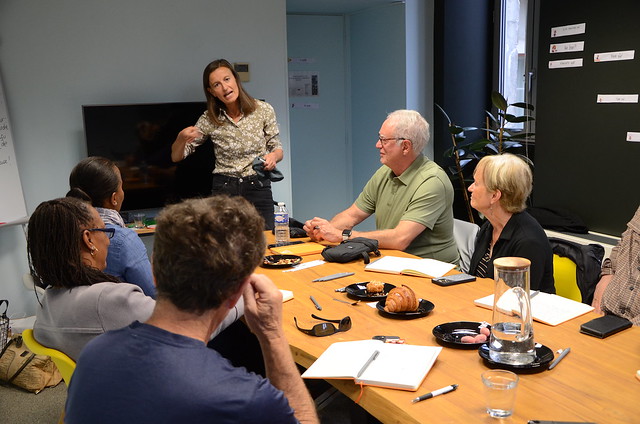
Similarly, my weekly live sessions can have the same positive impact on you. Chatting with me and other members in French helps solidify what you’ve acquired, expands your vocabulary, and fine-tunes your pronunciation.
Plus, it gives you a chance to have real conversations, which is great for building confidence, no matter your level.
Julie shared:
I’ve been enrolled in both Beginner Plus and Intermediate French classes this winter. At both levels, Alice brings the language to us in ways that we can understand, never pushing us too hard but using a variety of techniques to expand our knowledge and confidence, bit by bit. Some students start out shy, but Alice’s positive, encouraging, good-humored approach pulls them right in, and soon we have a comfortable, committed group. No session goes by without constant smiles and laughter. Alice is the best teacher I’ve ever had, and I’m 75 years old.
You can feel like Julie too! Don’t miss out this week’s live sessions:
– On Wednesday, we’re going to have fun looking at cat and dog pictures and guessing who their owners are. It’s the perfect way to understand and think French with ease (no matter your level). There are only 2 spots left, so be sure to sign up soon.
– Friday’s session will be all about sharing fun facts about ourselves. It’s a relaxed and enjoyable way to speak French freely and get to know each other better. We also have 2 spots left for this session, so make sure to to reserve your place.
Grab this opportunity : YOU’re part of a community that celebrates progress and growth.
Click here to reserve your spot now.
Cordialement,